How to Make an App Without a Tech Team: A Founder's Guide
To make an app without a tech team, you need five things in order: a clear problem, a tested idea, a small first version (an MVP), someone to build it, and a plan for launch day. No coding required. You make the founder calls; builders (and AI tools) do the rest.
- Write the problem in one sentence.
- Talk to 10–15 likely users before spending a cent.
- Build one job well. Everything else waits.
- Pick a builder with a fixed scope and full code handoff.
- A focused first version: about 4–8 weeks of build.
1What do you actually need before you make an app?
One page. Before anyone writes code, nail these four:
One sentence. “Physios lose bookings because clients forget appointments” is a problem. “An app for physios” is not.
Who opens the app first, and why today?
The single thing v1 must do well.
Sign-ups, bookings or paid users. Pick one.
Can’t fill the page in? You’re not ready to spend on development yet. That’s fine: it’s the cheapest step to get right.
2How do you check your app idea is worth building?
Validate your app idea before you build. You want proof people have the problem and will change behaviour to fix it.
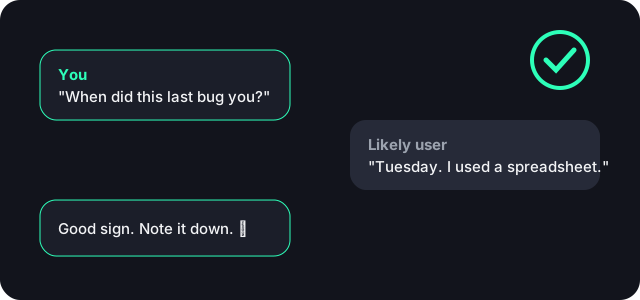
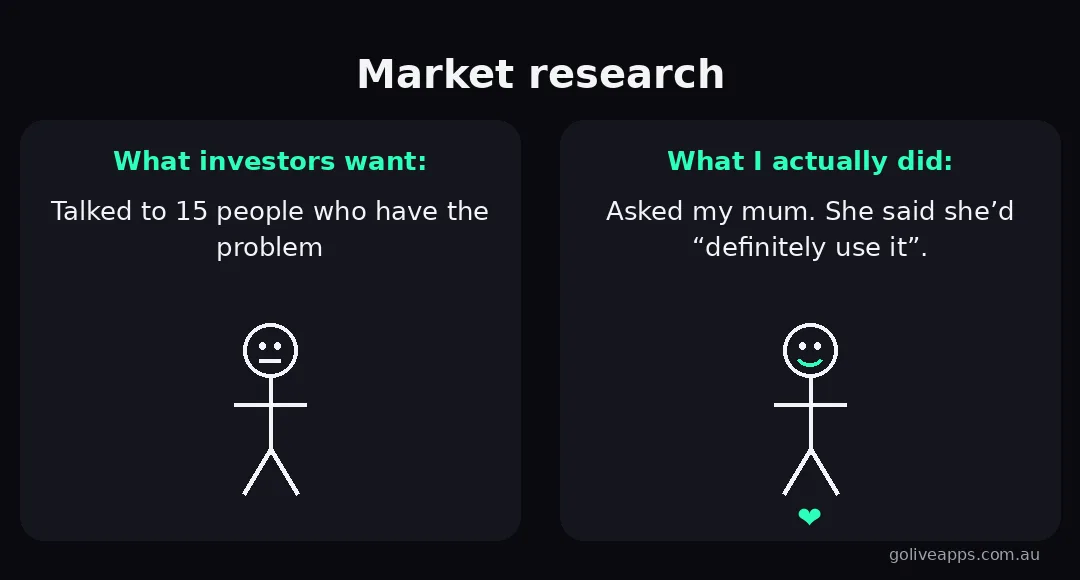
- Talk to 10–15 likely users. Ask about the last time the problem happened, not “would you use an app?”
- See what they use now. Spreadsheets, group chats and paper forms are good signs.
- Put up a simple landing page that asks for an email. Do people sign up?
- Check the competition. If a big player already does it, sharpen your angle.
Need a business plan too? The Australian Government’s business planning guides are a solid free start.
3What should go in the first version of your app?
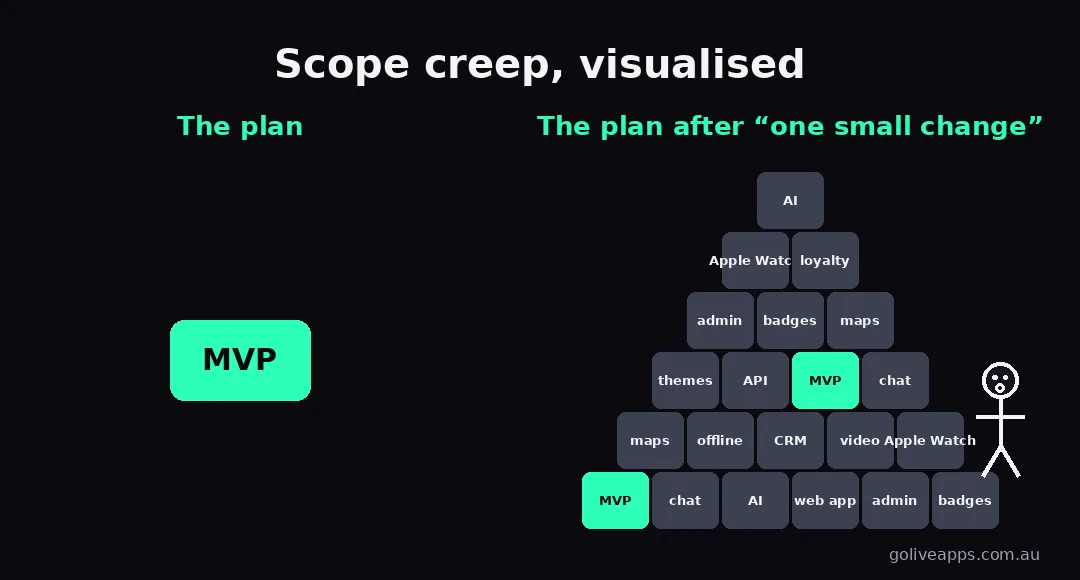
Less than you think. Your MVP does the one job and nothing else. (More in MVP development: how to ship your first app in weeks.)
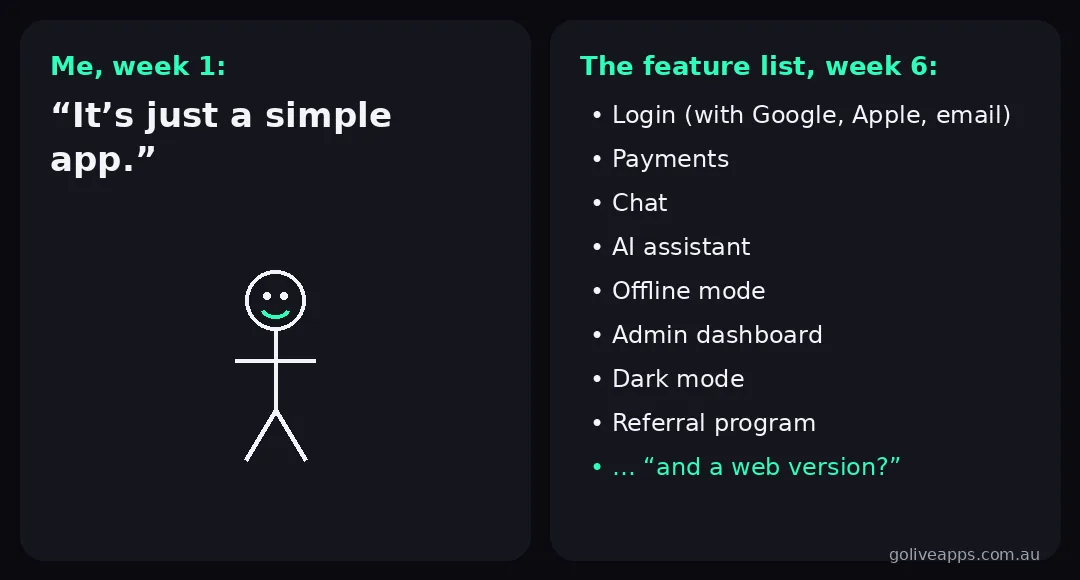
The test for every feature: if it was missing, would users still get the core value? If yes, it goes on the “later” list.
🧪 Try it: the MVP feature picker
Tick what you think v1 needs. We’ll tell you how lean your scope looks. (No prices, just a gut check.)
Tick a few features to see your scope hint.
Rule of thumb: if you ticked more than the first three, look hard at what can wait.
4Should you use a no-code tool, an AI app builder or an app studio?
All are real options. Quick guide:
| Option | Good for | Watch out for |
|---|---|---|
| No-code / AI app builders | Testing an idea, internal tools, prototypes | Limits on custom logic, scale and app-store polish; check who owns the code and data |
| Freelancer | A small, well-defined piece of work | You become the project manager; quality varies a lot |
| App studio | A production app you plan to grow, with no tech team | Higher upfront cost; insist on fixed scope and full code handoff |
Still testing? A weekend with an AI app builder can be the right call. If people use it and you need something real, that’s when a studio makes sense.
🧭 Quiz: which build path fits you?
Answer all three to see your path.
Testing an idea: try a no-code or AI builder. Small, defined job: a freelancer. Polished app with no tech team: an app studio.
5How do you choose who builds your app?
Ask every developer or studio before you sign:
Hourly isn’t wrong, but you carry the risk if scope grows.
You, from day one. Ask for the repo, not just a running app.
Mainstream tools (e.g. React Native, Supabase) mean anyone can pick it up later.
Bug fixes, store updates and support, in writing.
Weekly demos beat a big reveal at the end.
6How long does it take to make an app?
For a focused first version: roughly 4–8 weeks of build once the scope is clear. Many user types, integrations or compliance needs take longer. Scoping and validation come first, and they’re what keep the build short.
7How much does it cost to make an app in Australia?
Scope drives cost more than anything. Our published GoLive Apps packages, all fixed-price sprints:
- MVP Sprint: from about $35k
- Full Build: $55k to $85k
- Enterprise: 8+ weeks of work, scoped together
Don’t forget running costs:
US$99 per year, per Apple (checked Nov 2026).
US$25 one-time, per Google’s Play Console help (checked Nov 2026).
Usually small at launch, growing with users.
Apple and Google change rules yearly. Budget for maintenance.
8What happens when your app is ready to launch?
Launching isn’t just pressing “publish”.
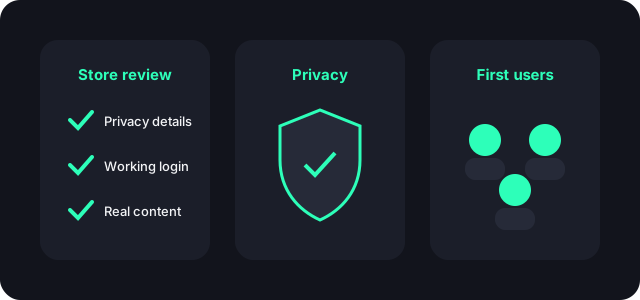
- Store review: read Apple’s App Review Guidelines early. Rejections often come from missing privacy details, broken logins or thin content.
- Privacy: collecting personal info? You need a privacy policy, and the Australian Privacy Principles may apply. Get proper advice for health or financial data.
- First users: go back to the people you interviewed. They’re your first testers, and if you listened, your first customers.
Want help making your app?
GoLive Apps is for founders with an idea and no tech team. Human developers working with AI tools take your app from scope to launch in 4–8 weeks, on fixed-price sprints, and you get the full source code at handover. We build with Next.js, React Native, Supabase and Claude.
Frequently asked questions
Can I make an app with no coding experience?
Yes. You can use a no-code or AI app builder to test an idea yourself, or hire a studio or freelancer to build it. Your job is to define the problem, the user and the one thing the first version must do.
How long does it take to make an app?
A focused first version usually takes about 4 to 8 weeks of build time once the scope is agreed. Larger apps with more user types, integrations or compliance needs take longer.
How much does it cost to make an app in Australia?
It depends mostly on scope. GoLive Apps publishes fixed-price packages: an MVP Sprint from about $35k and a Full Build at $55k to $85k (AUD, including GST). Also budget for Apple and Google developer accounts, hosting and ongoing updates.
Do I own the code if someone else builds my app?
You should. Ask for full source code ownership in writing before you sign. GoLive Apps hands over the source code at launch.
Should I build for iPhone or Android first?
Look at where your users are. A cross-platform framework such as React Native lets one codebase run on both, which is often the practical choice for a first version.
Related: MVP development: how to ship your first app in weeks · GoLive Apps home